Vodka Punch

Vodka Punch

A Recipe from Big League Cookbook (1970)

About the Recipe

The Super Bowl just happened here in the States. As is popular, my best friend hosted a Super Bowl party with some friends, and I helped prepare some yummy additions to the meal. To start – this delightful vodka punch!

We decided early on to make this a virgin punch, and to let everyone add their own alcohol. Honestly, it was delightful as a punch on its own. It stood on good feet without ice, though chilled this would make an excellent addition to a picnic or barbecue. The kids (aged 2-16) enjoyed it as well, and most folks enjoyed seconds and thirds. It was the perfect, bright and light addition to an otherwise heavy feast. 10/10 will make again.

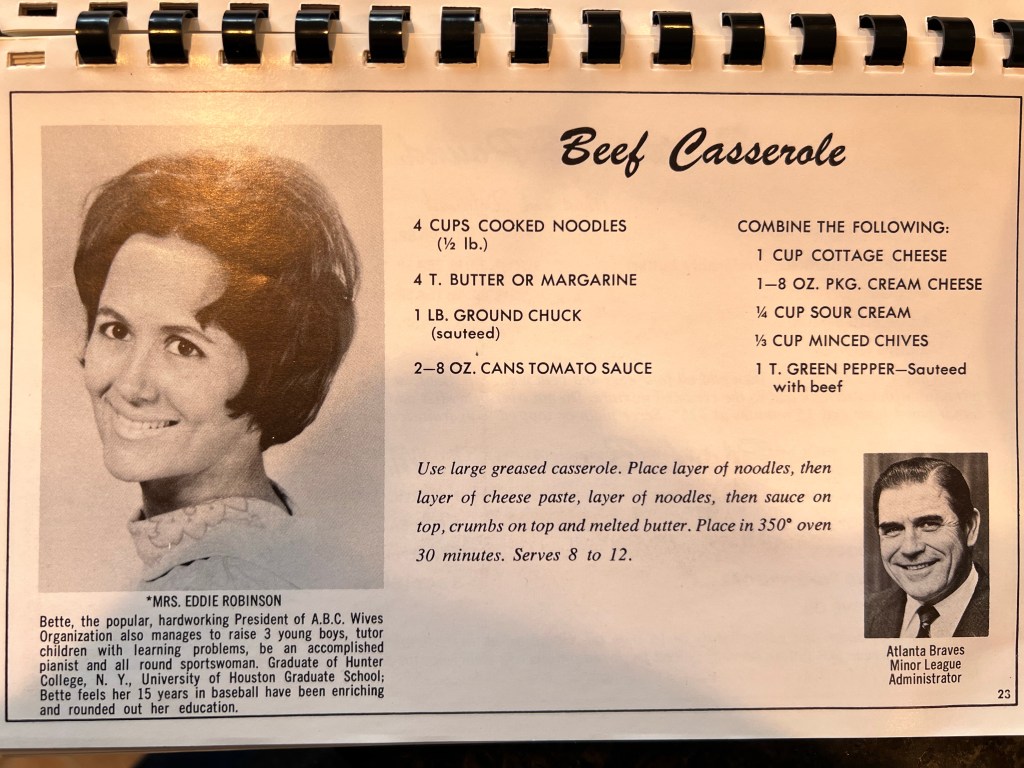
And just in case it’s hard to read, here’s the note from Mrs. Dick Cecil (Atlanta Braves-Chiefs Vice President) – This is a punch which really tastes good and has been a great help on many occasions. We entertained four Latin American peace officers one time who didn’t speak English and we didn’t speak Spanish. After they arrived, and I learned of the dilemma, I quickly went to the kitchen and added another bottle of vodka and we had a great time — ending the evening doing the Mexican Hat Dance!

About the book

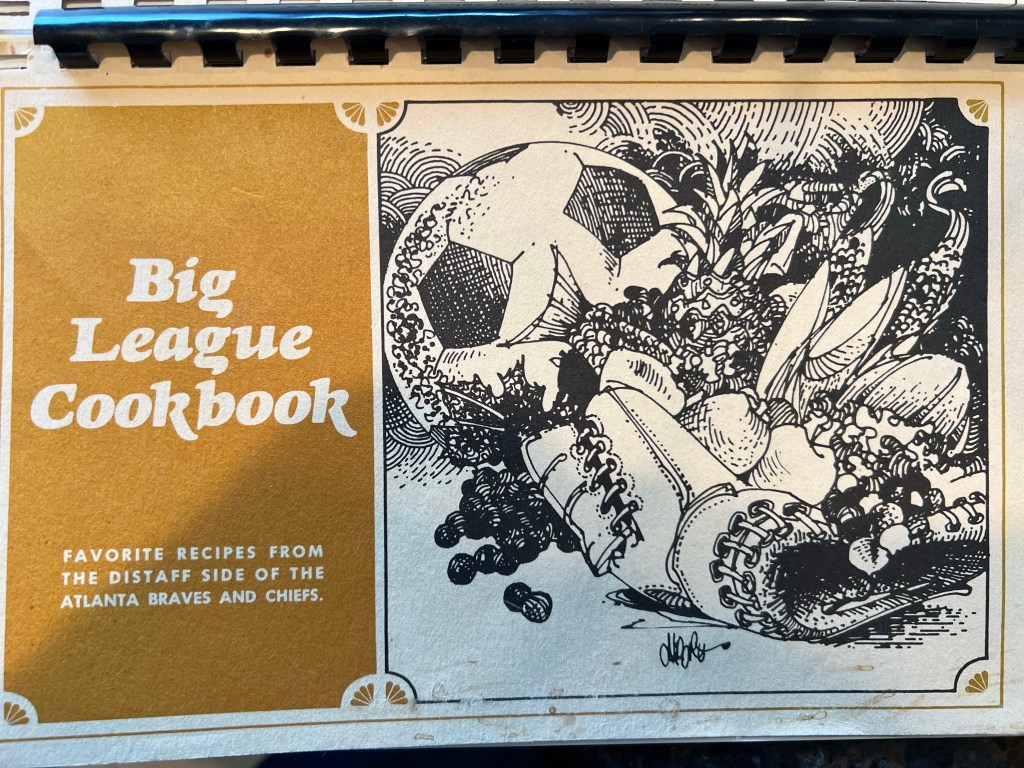
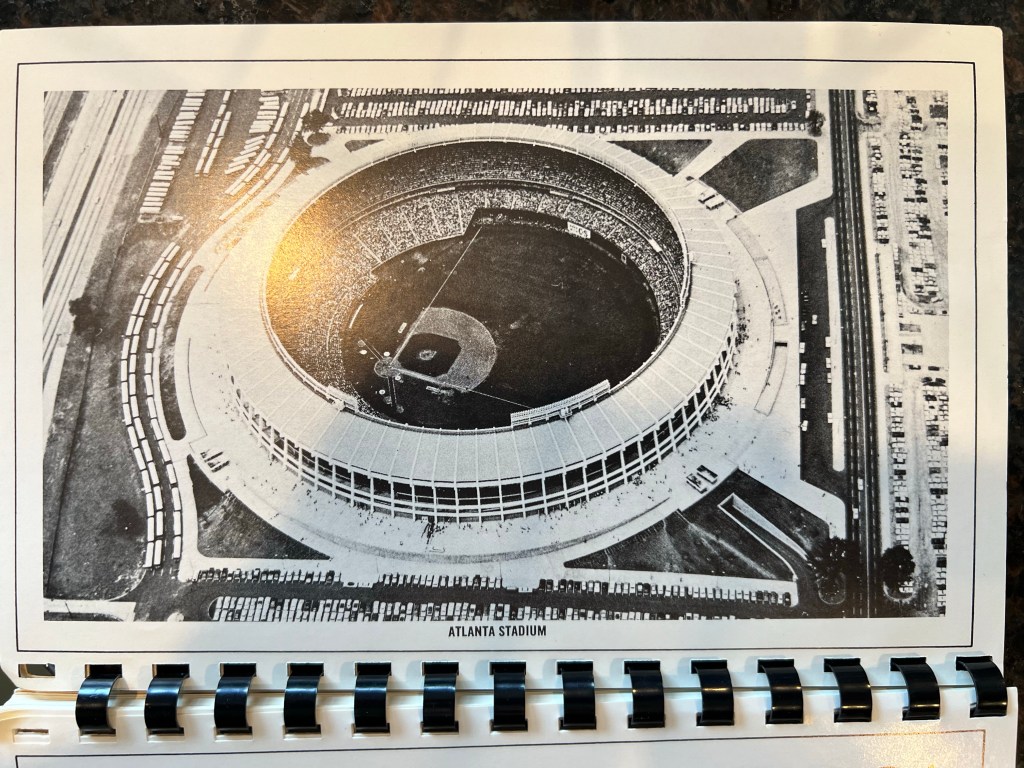
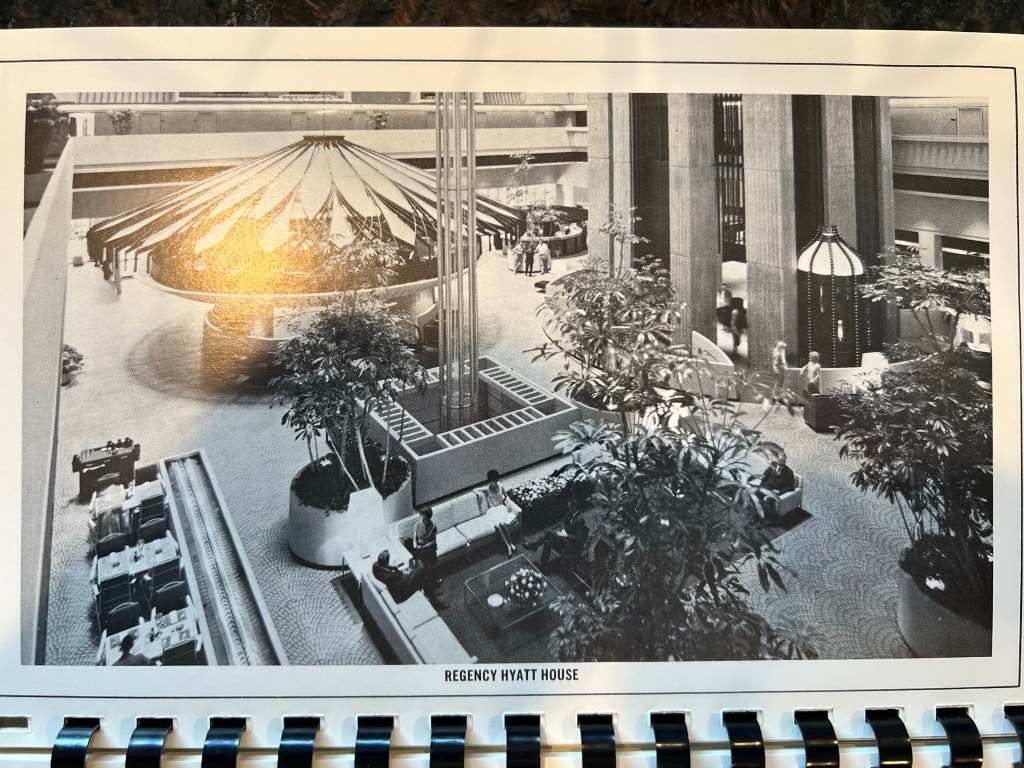
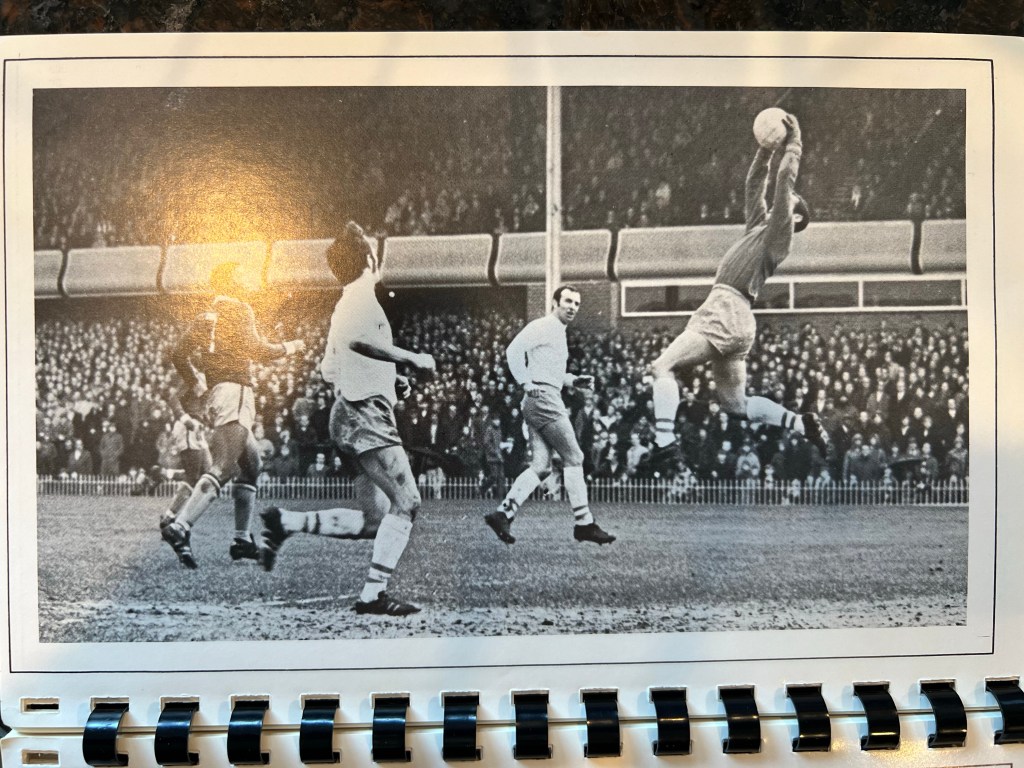
I’ve been waiting for the perfect moment to break out this cookbook. It’s basically a community cookbook, but that community is the 1970 Atlanta Braves and Chiefs (a short-lived soccer team). The Braves team includes a number of famous players and Hall-of-Famers, including Hank Aaron and Hoyt Wilhelm. The history contained in this book is enough to make any sports fan excited (including my husband, who was also super excited to find this one). With that, I’ll leave you with some photos of the book itself. This post is 1 of 2 from this book and the Super Bowl. Find more photos and the other recipe here: Buttermilk Pound Cake (To be updated soon…)

The Recipe!

Ingredients:

3 quarts unsweetened pineapple juice
8 lemons juiced
8 oranges juiced
3 limes juiced
4 quarts ginger ale
One-two quarts vodka

Directions:

Mix together, and enjoy!

Royal Coconut Cookies

Royal Coconut Cookies

A Recipe from Quaker Surprise Recipes (195?)

About the Recipe

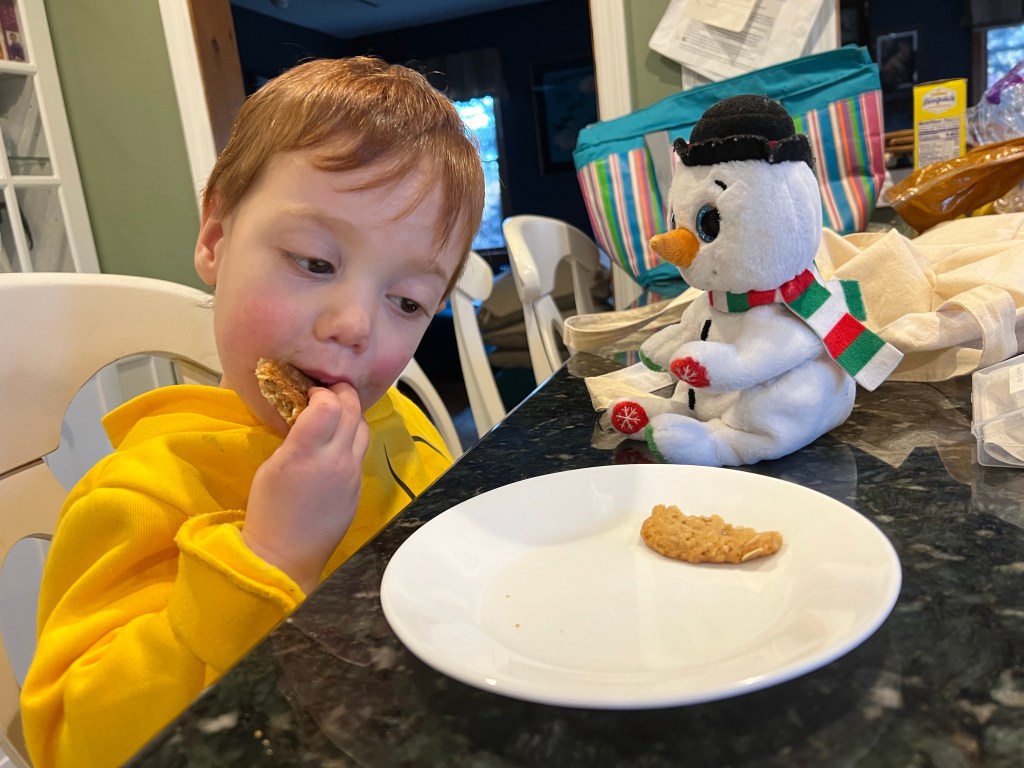
My family and I were invited to join a close friend / auntie for dinner tonight, and I was asked to bring dessert. I wanted to grab a recipe that was fairly simple so that my 2-year-old son, Maxx could help. These sweet, crispy on the outside, chewy on the inside cookies were exactly the right choice!

The recipe is written very simply, so I’ll offer a few reminders:

  • The year is now 2024, and stand mixers exist. Please feel free to use one. I forgot at first, and was wondering why I was having some difficulty getting everything to come together. An electric beater will also work, or you can go old school and pull out a hand beater!
  • There’s a ton of sweetness already in this recipe. Unsweetened coconut flakes will do just fine if you can find them.
  • I used vanilla extract, which worked well, but I think this recipe would really come to life with the almond extract.

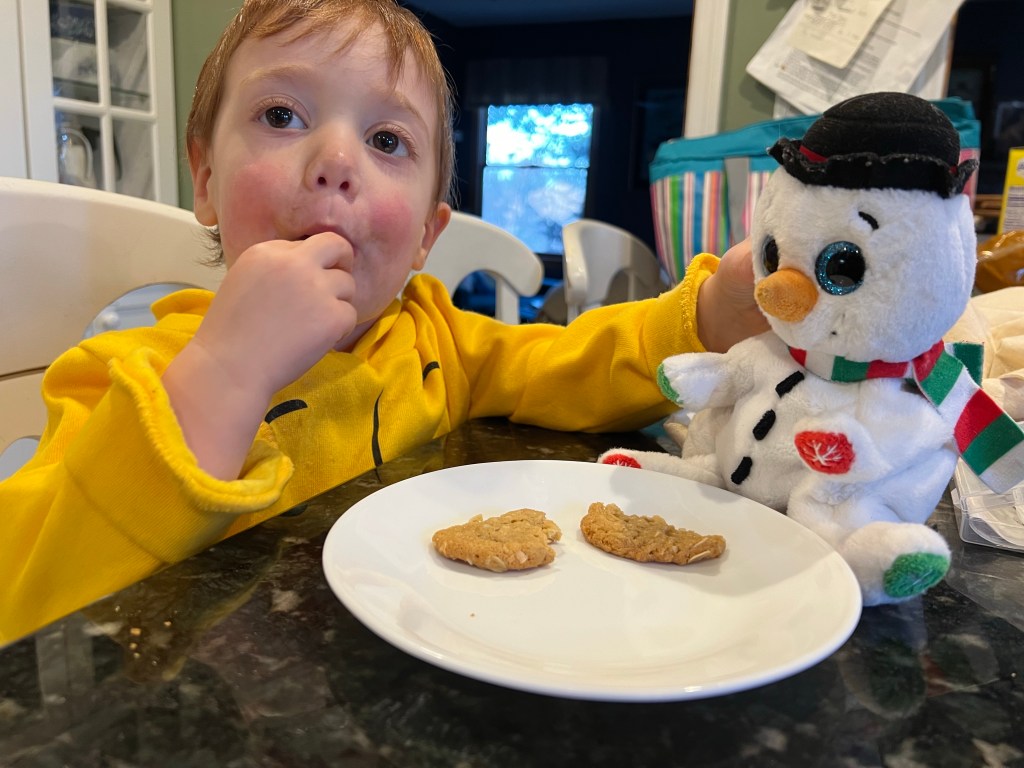
All in all, this was the perfect recipe to make with Maxx. And he was so excited to try them with his friend Weatherby!

About the book

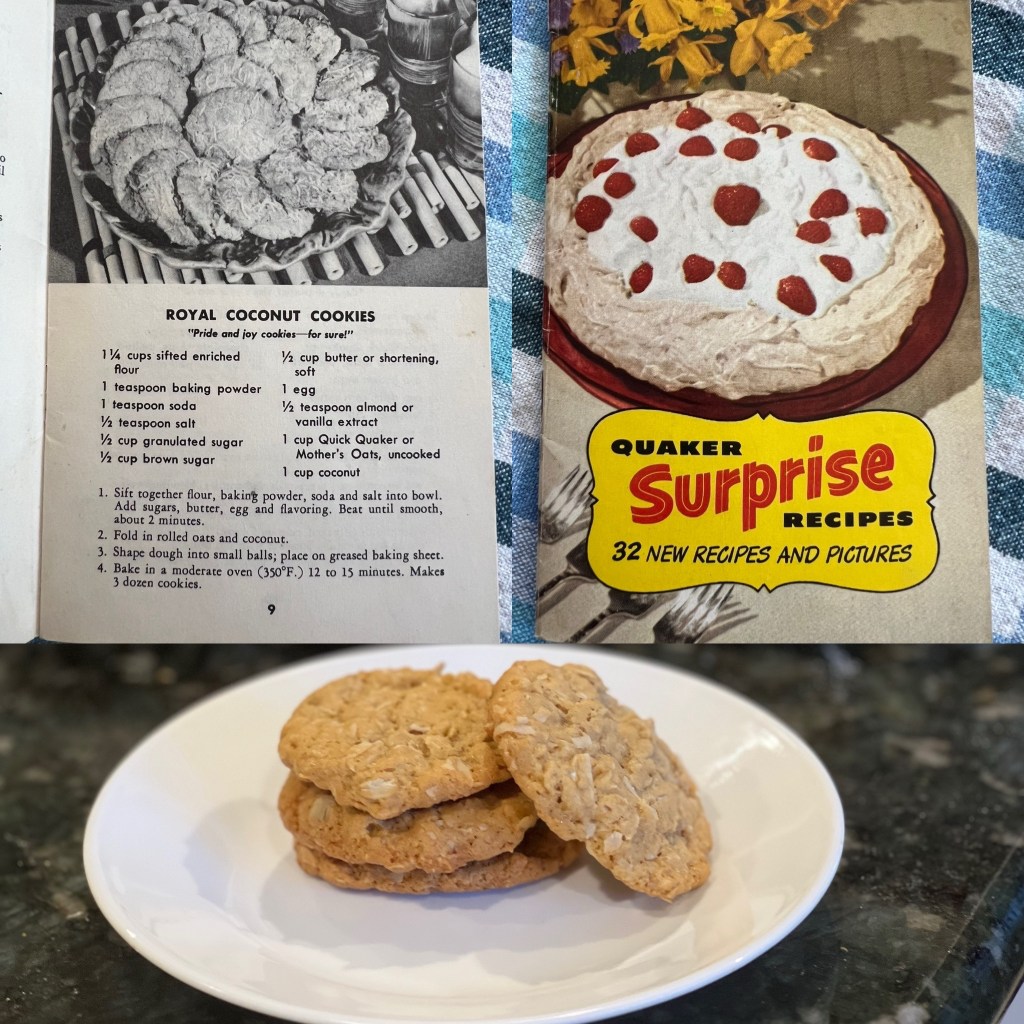
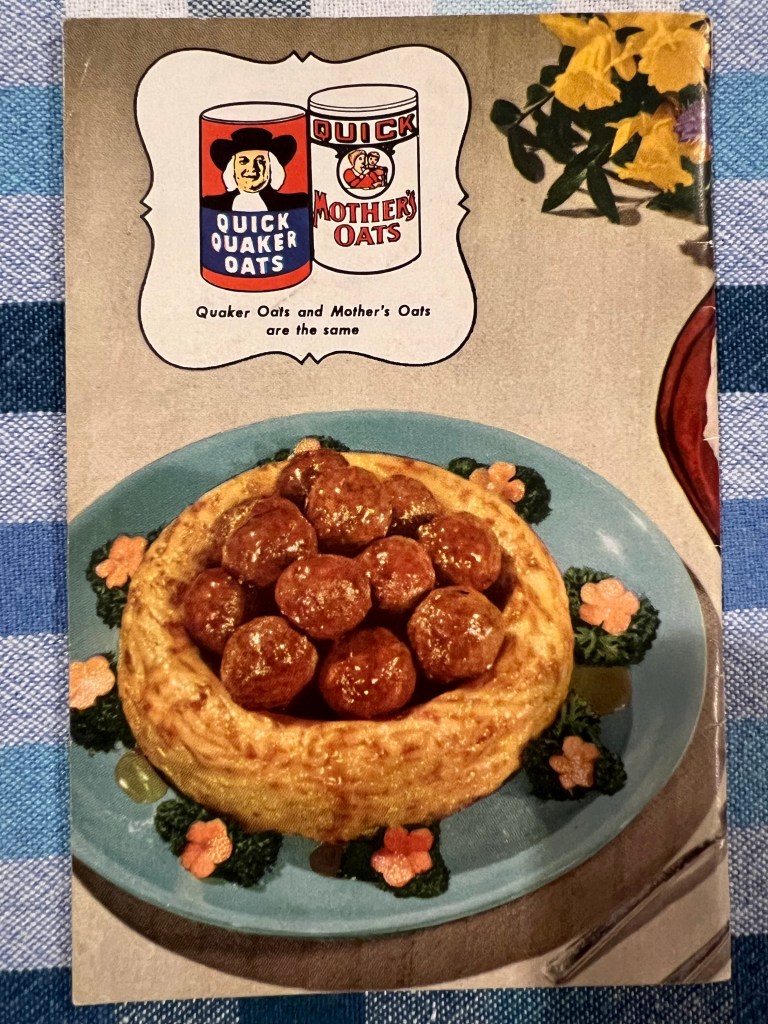
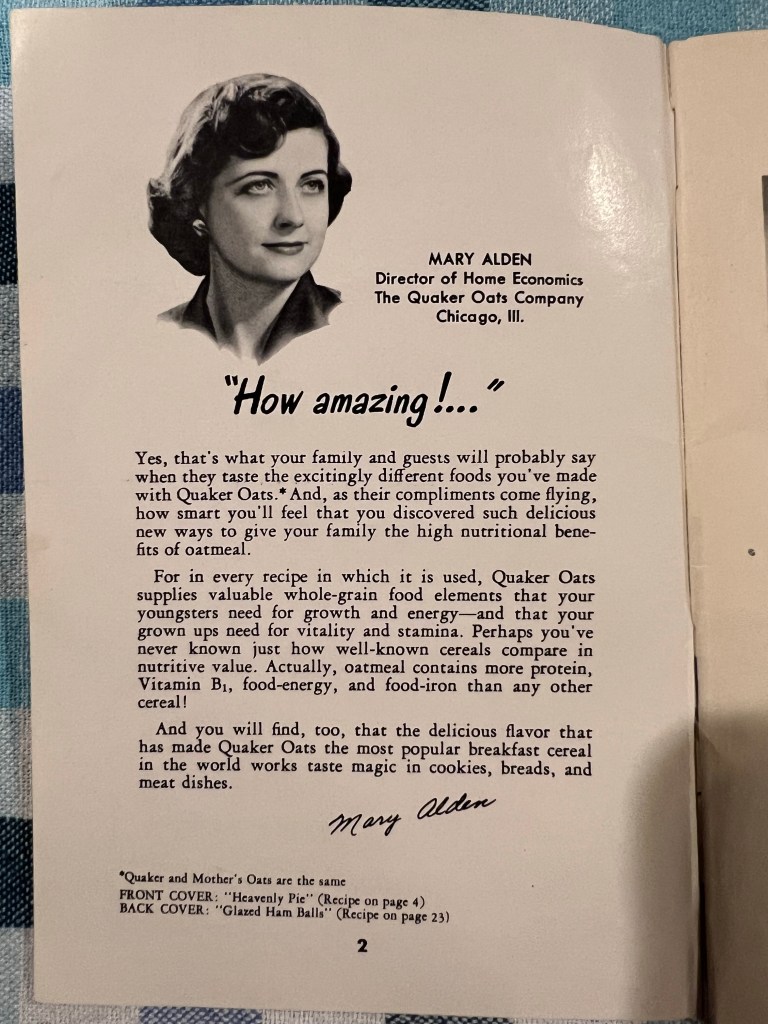
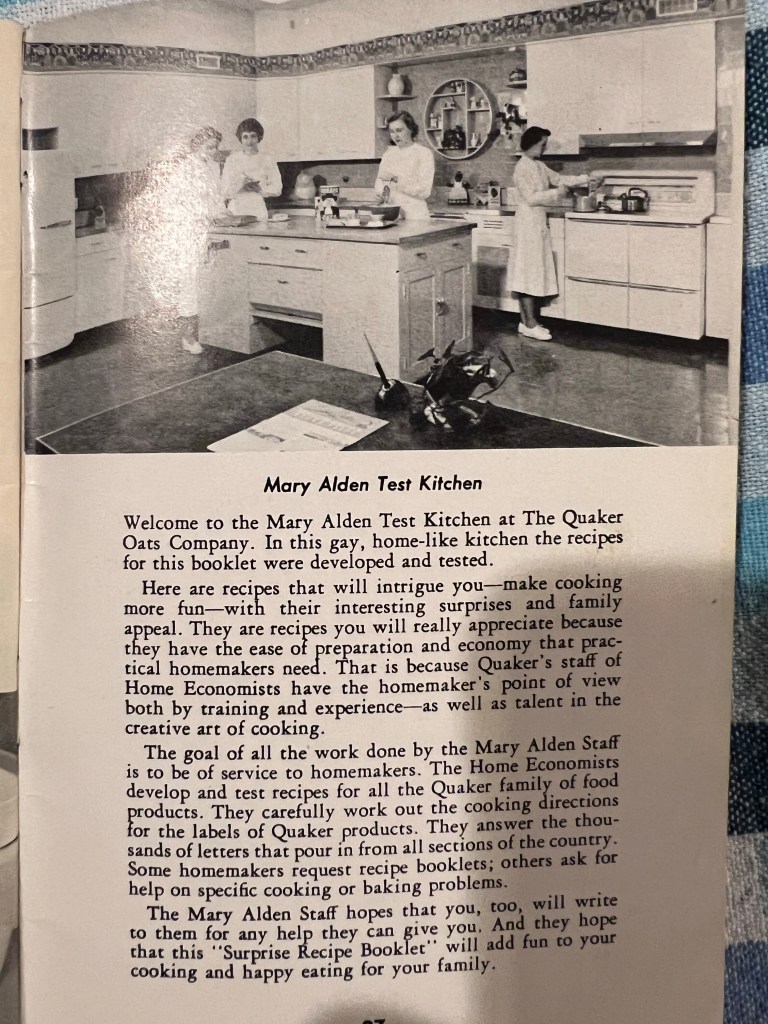
This little booklet is so stinkin’ cute! It comes from the Mary Alden Test Kitchen in partnership with Quaker Oats/Mother’s Oats (according to this article, acquired in 1911). Dating the book was challenging, but I’m guessing mid/late 1950’s. That seems to be the height of Mary Alden’s other cookbooks. Instant oats are also nowhere to be found in this booklet, and they were introduced in 1961. Any other marketing/brand name collaboration would have highlighted that kind of new product innovation. Anyway – enough of the history! Enjoy the book!

The Recipe!

Ingredients:

1 1/4 cups sifted enriched flour
1 t baking powder
1 t soda
1/2 t salt
1/2 cup granulated sugar
1/2 cup brown sugar
1/2 cup butter or shortening, soft
1 egg
1/2 t almond or vanilla extract
1 cup Quick Quaker or Mother’s Oats, uncooked
1 cup coconut

Directions:

1. Sift together flour, baking powder, soda and salt into bowl. Add sugars, butter, egg and flavoring. Beat until smooth, about 2 minutes.

2. Fold in rolled oats and coconut.

3. Shape dough into small balls; place on greased baking sheet.

4. Bake in a moderate oven (350*F) 12 to 15 minutes. Makes 3 dozen cookies

Ginger Cookies

Ginger Cookies

A Recipe from The Christmas Cookie Book (1949)

About the Recipe

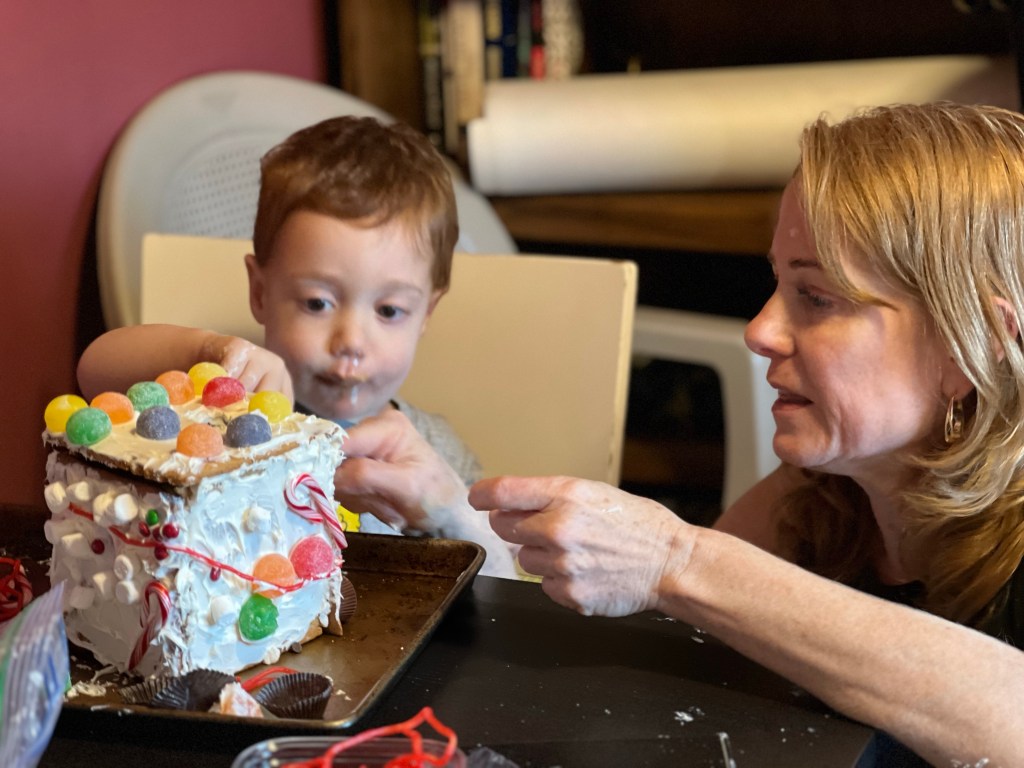
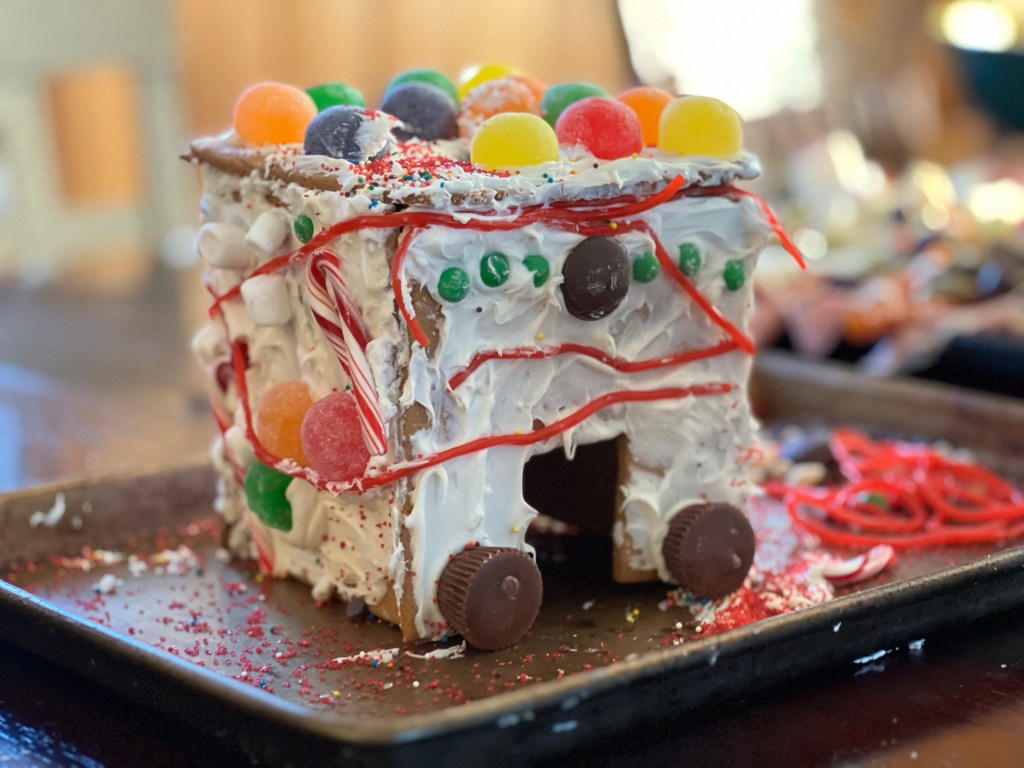
For this year’s Christmas gathering, I was craving a special treat to work on with my son and one of my favorite chosen niblings. With fingers crossed, I pulled out this recipe, made a few small tweaks (a little less molasses makes for a crunchier, sturdier cookie wall), and worked with my family to start architecting a design.

I have to say, these cookies were absolutely superb. They held up to decorating, and with a 2-year-old and a 5.5-year-old going to town, hyped up on sugar, that’s no small feat. They had a nice crunch, but didn’t break teeth. They have just a hint of sweet, and plenty of spice coming up behind. All in all – an absolutely perfect, Christmas-y cookie.

For those who also would like to build, I used Alton Brown’s Royal Icing recipe, which not only worked splendidly, but lasted for a few days stored in an airtight container.

About the book

The Christmas Cookie book was a gift from a dear friend of mine. Back when I was first starting my collection, she knew that my house was a hub for Christmas, and that I was very into these old cookbooks. I had absolutely no idea there were quite so many varieties of Christmas cookies, and I think I’ll work on trying a new one from this book each year, especially if they’re as successful as this ginger cookie recipe was.

One thing to note here – it’s very common for books of this time period to have kind of half recipes. You’ll notice in the recipe below, that this book has a delightful variation on that – it gives you not quite enough information in some places, and way too much in others. I absolutely love it.

In addition to the heaps of lovely, over/underwritten recipes, there’s a wonderful collection of little illustrations throughout the book:

Building the Houses

I try not to make these blog posts too long, but I can’t resist a special section for this one:

The Recipe!

Ingredients:

5/8 cup molasses
1 3/4 cups sugar
1/2 cup butter
1/2 cup thick sour cream
2 T finely chopped orange peel
2 t cinnamon
1 t each cloves, all-spice, ginger
4 egg yolks
2 t baking soda
6 cups flour (about)

Directions:

Heat molasses and sugar until dissolved. Add butter and allow to cool before adding cream, chopped orange peel and seasonings. Add one yolk at a time alternately with the flour sifted with soda. Cut out in Christmas tree, stocking or bell shapes. Brush with egg yolk and sprinkle with colored sugar. Or cut out in Santa Claus shapes to be frosted after baking. Bake in a moderate oven (350*) for about 15 minutes. This cookie has a wonderful flavor, but has a bad habit of rising, then falling, in the oven, and so ends up with a wrinkled surface. It therefore looks much better when decorated.

Lemon Squares

Lemon Squares

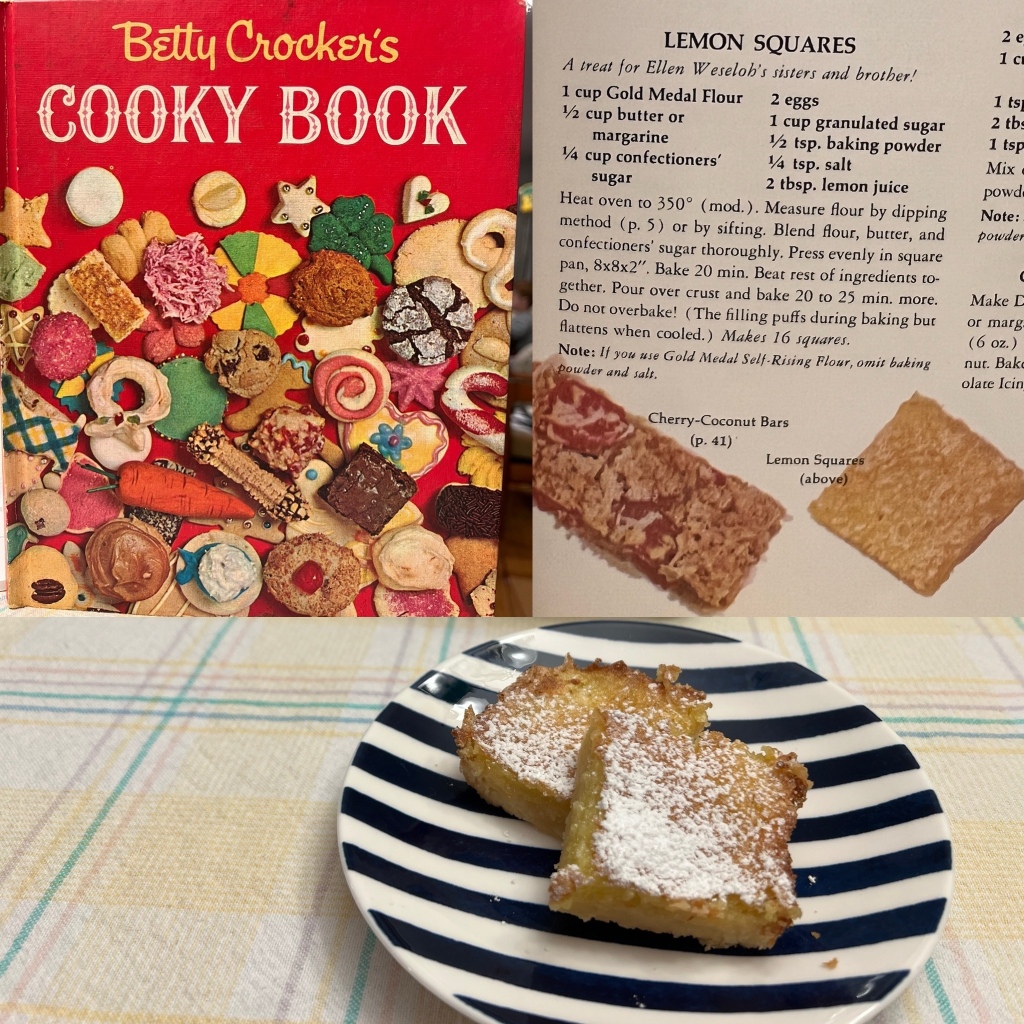
A Recipe from Betty Crocker’s Cooky Book (1963)

About the Recipe

I’ve been on a baking kick lately and I was looking for something new, but maybe outside of the normal flavors of the season. There is a point where there is too much ginger, nutmeg, and cinnamon, and it’s possible I’ve hit my limit a little early this year. So when I went looking for a dessert, I wanted something that would lift up an otherwise heavy meal. Clearly lemon squares are the answer.

Sometimes lemon squares or lemon bars can be complicated. These are some of the easiest and most effective and delicious that I’ve made. The bottom is buttery and crumbly and just melts in your mouth. The whole thing took about an hour from start to finish and makes 16 squares. It was perfect for a quick and yummy dessert to make on the fly.

This recipe is a little on the sparse side. Betty seems to bank on the baker knowing certain technical skills and best practices when it comes to cookies and bars. I’ll offer a few tips to make this recipe really a success:

  • Use refrigerator cold butter to cut into your flour and confectioner’s sugar. Cut it into smaller pieces, and then toss it in. It makes it much easier to blend.
  • I used a pastry blender to get the base mix down to a sand-like texture. It would be just as easy to pop it all into a food processor and pulse until you get the same texture. This helps to create that buttery, crumbly base that no one can resist.
  • My husband loves a lemony lemon bar, so I added a little bit more juice than recommended. Next time, I’ll also add some fresh zest or dried lemon peel to really make it zing.
  • Wait until it cools to cut it! If you don’t you risk the top kind of coming apart on you. I also recommend keeping a wipe nearby to clean your knife as you cut, just to make it a little bit more neat.
  • The recipe doesn’t call for the confectioner’s sugar on top, but who doesn’t love a little dusting on the top of a lemon bar?

About the book

The Betty Crocker Cooky Book is a staple of any mid-century cookbook collection. It seemed like everyone had a copy… except for me. But lo and behold, my favorite Antiques Barn in New Paltz, NY came through again! I found it hiding on a cart, just waiting for me to grab it up.

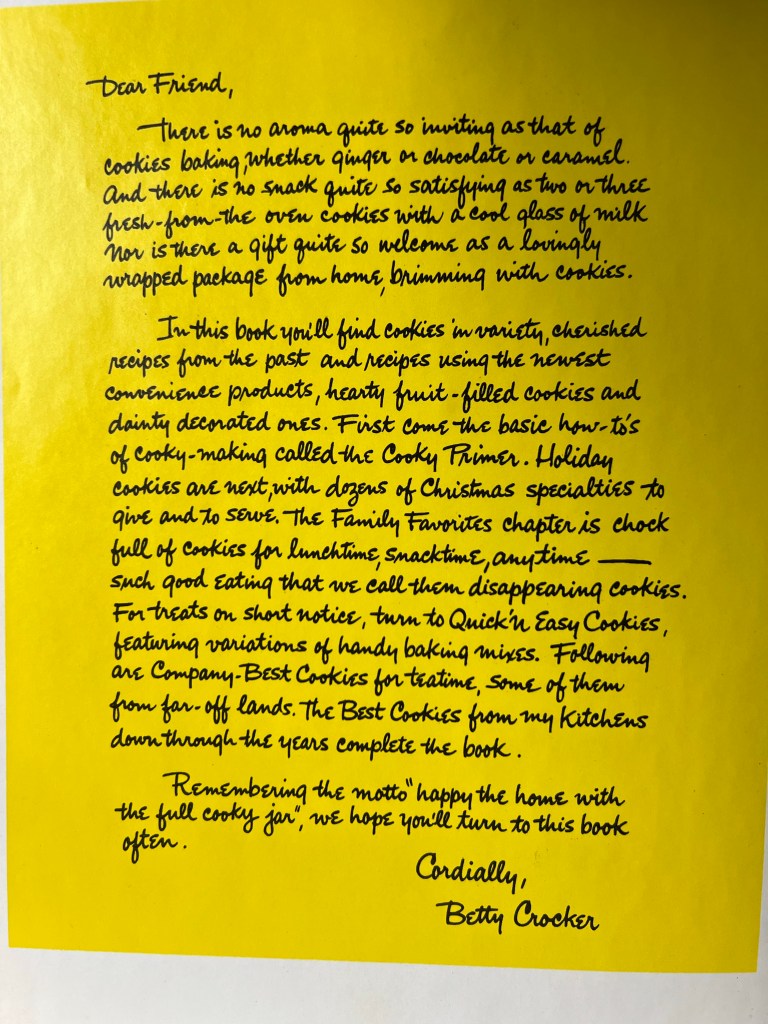
It’s worth the reminder here that Betty Crocker was not a real person, but a very complex (and effective) marketing scheme. I love the detail that they give to her character in these books. Worth a read to really get yourself in the mood for some vintage baking:

The Recipe!

Ingredients:

1 cup flour
1/2 cup butter or margarine
1/4 cup confectioners’ sugar
2 eggs
1 cup granulated sugar
1/2 t baking powder
1/4 t salt
2 T lemon juice

Directions:

Heat oven to 350*F. Measure flour by dipping method or by sifting. Blend flour, butter, and confectioners’ sugar thoroughly. Press evenly in square pan, 8x8x2″. Bake 20 min.

Beat rest of ingredients together. Pour over crust and bake 20 to 25 minutes more. Do not overbake! (The filling puffs during baking but flattens when cooled.)

Blueberry Buckle

Blueberry Buckle

A Recipe from the Mary Margaret McBride Encyclopedia of Cooking (1959)

About the Recipe

When a friend invited me over for dinner at the tail end of berry season, and with a fridge full of blueberries, I happily volunteered – “I’ve got dessert!” This quick and easy little cake was the perfect cap to a dinner with friends. Any berry could be easily substituted for the blueberries, and you could even go full on triple berry if you’re feeling saucy. Any way it’s done, this is a great last-minute-I’ve-got-the-dessert recipe.

While we’re here though – you might be asking yourself, what is a “buckle?” Simply put, a buckle is much like a coffee cake. It’s traditionally got fruit in the batter and a crumb topping, with a fairly high batter to fruit ratio. It’s called a buckle because the weight of the crumb makes the cake do just that when it comes out of the oven – buckle!

About the Book

Part of my weekly routine since I started collecting cookbooks is to sit down with a small stack of them as I’m making my grocery list, and picking out one or two to try over the course of the week. While that’s fantastic for finding new things to try for dinner, it’s not great when I’m seeking something specific (like, say, blueberry desserts). For the specific ask, there’s only one resource I turn to – the Mary Margaret McBride. I’ll spare more waxing poetic about this amazing book for now, but suffice it to say that if you’re looking for a gift for someone new to the kitchen this is the perfect fit.

Check out more recipes in the Mary Margaret McBride Collection here!

About the Glassware

The baking dish is a new acquisition of mine from a road trip I took with my husband earlier this year. It’s a Fire King by Anchor Hocking with a Primrose pattern. This pattern was produced in the early ’60’s and when I saw it, I had to add it to the collection. I rarely see this pattern in my usual antique/vintage haunts and it’s just so cute. It felt like the perfect mid-century dish for this mid-century dish.

The Recipe!

Ingredients:

Crumb Topping:
1/2 cup sugar
1/3 cup sifted enriched flour
1/2 t cinnamon
3 T soft butter or margarine

Batter:
1/4 cup soft butter or margarine
3/4 cup sugar
1 egg
1/2 cup milk
1 1/2 cups sifted enriched flour
2 t baking powder
1/2 t salt
1 14-oz can blueberries, drained OR 1 pint fresh blueberries

Directions:

Crumb Topping:
Measure sugar, flour, and cinnamon into small bowl. Mix well.

Add butter or margarine and cut in with fork or pastry blender until mixture is consistency of crumbs

Batter:
Stir butter or margarine until creamy. Add sugar, gradually, mixing until creamy. Beat in egg. Add milk.

Sift together flour, baking powder, and salt. Stir into butter or margarine mixture, stirring until smooth. Gently fold in blueberries.

Spread batter into well buttered pan, 8×8 inches.

Sprinkle with crumb topping. Bake in moderate oven (375*F.) 45-50 minutes.

Perfect Potato Salad

Perfect Potato Salad

A Recipe from Better Homes & Gardens Salad Book (1958)

About the Recipe

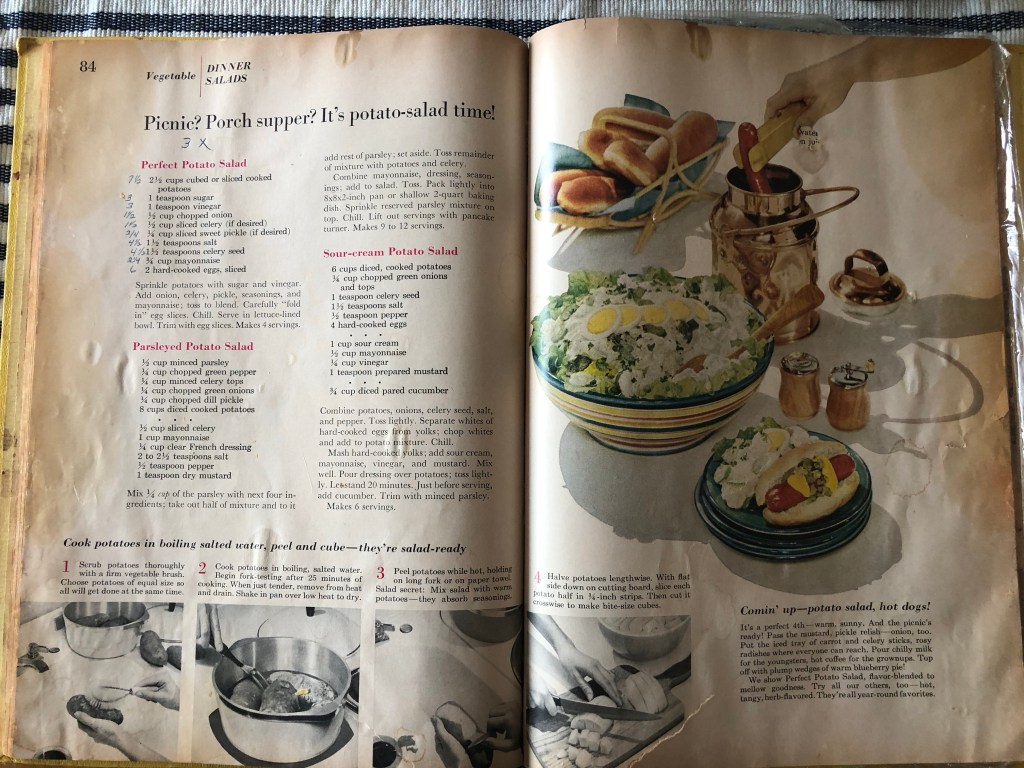
When friends are coming over for a beach picnic, what do you do? You make potato salad, of course! I went to this book right away looking for a recipe, knowing that it was one of my grandma’s go-to’s. When I saw the 3x math on the page, I knew this one had to be a winner!

My husband doesn’t like celery, so I left it out. The onions and pickles give it plenty of crunch and flavor, and in the end it’s exactly as described – a perfect potato salad.

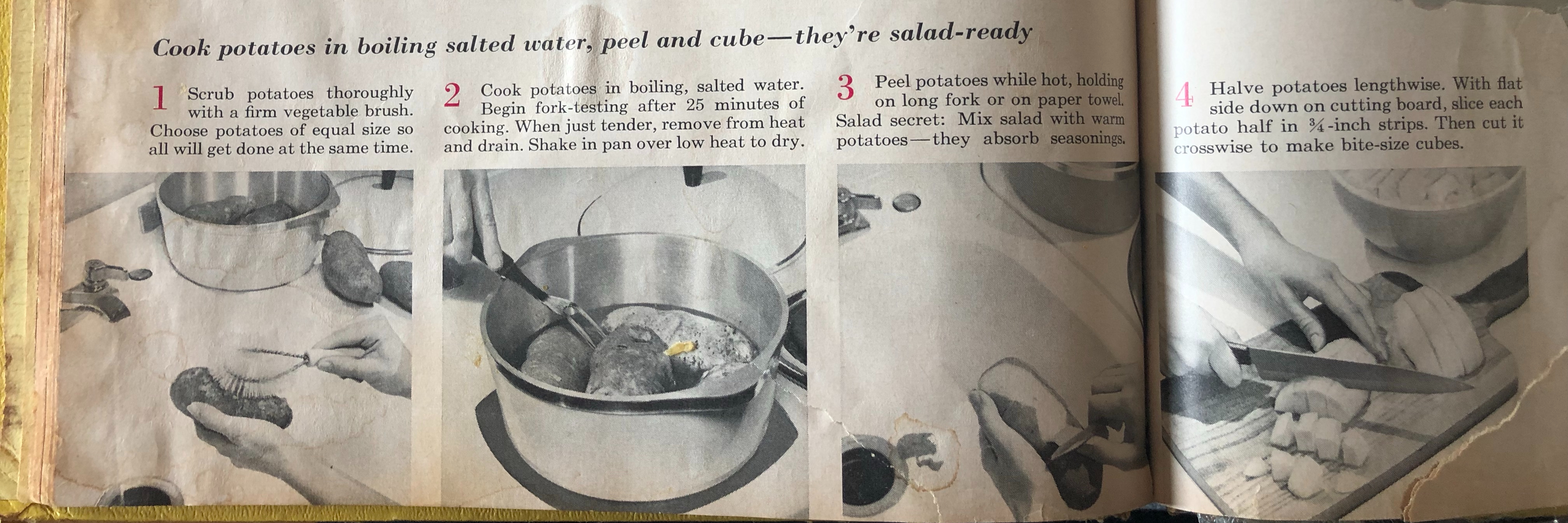
For potato salad newbies (like me!), don’t miss the step by step instructions on how to cook the perfect potato for a salad.

About the Glassware

I found the cradle and the Fire King rectangular baking dish together at a vintage store just outside of Palm Springs on a recent visit. It’s not clear on whether they might have been originally purchased together or not. Many sets like this seem to have a clear dish instead of an opaque one. Either way, it’s a great little serving piece, and I can’t resist the opportunity to make potato salad look fancy.

About the Book

I went to visit my grandma this past weekend, who is getting ready to move out of the house that she’s lived in for… well a very long time. It’s no secret to anyone following my posts that she’s a big inspiration for a lot of the work I do on this blog. While I was there, she told me to take the cookbooks. Any of them that I wanted, including this Salad Book. I cried.

This book is so clearly well loved and well used. There’s a page covered in plastic wrap, because a recipe was used so often, she was trying to keep the splatter off it (a Caesar salad, for the record!). There are splotches on most, if not all of the pages. The edges are torn. I could not love this book more.

The Recipe!

Ingredients:

2 1/2 cups cubed or sliced cooked potatoes
1 t sugar
1 t vinegar
1/2 cup chopped onion
1/2 cup sliced celery (if desired)
1/4 cup sliced sweet pickle (if desired)
1 1/2 t salt
1 1/2 t celery seed
3/4 c mayonnaise
2 hard-cooked eggs, sliced

Directions:

Sprinkle potatoes with sugar and vinegar. Add onion, celery, pickle, seasonings, and mayonnaise; toss to blend. Carefully “fold in” egg slices. Chill. Serve in lettuce-lined bowl. Trim with egg slices.

Cook potatoes in boiling salted water, peel and cube — they’re salad-ready

1. Scrub potatoes thoroughly with a firm vegetable brush. Choose potatoes of equal size so all will get done at the same time.

2. Cook potatoes in boiling, salted water. Begin fork testing after 25 minutes of cooking. When just tender, remove from heat and drain. Shake in pan over low heat to dry.

3. Peel potatoes while hot, holding on long fork or on paper towel. Salad secret: Mix salad with warm potatoes — they absorb seasonings.

4. Halve potatoes lengthwise. With flat side down on cutting board, slice each potato half in 3/4-inch strips. Then cut it crosswise to make bite-size cubes.

Aloha Banana Bread

Aloha Banana Bread

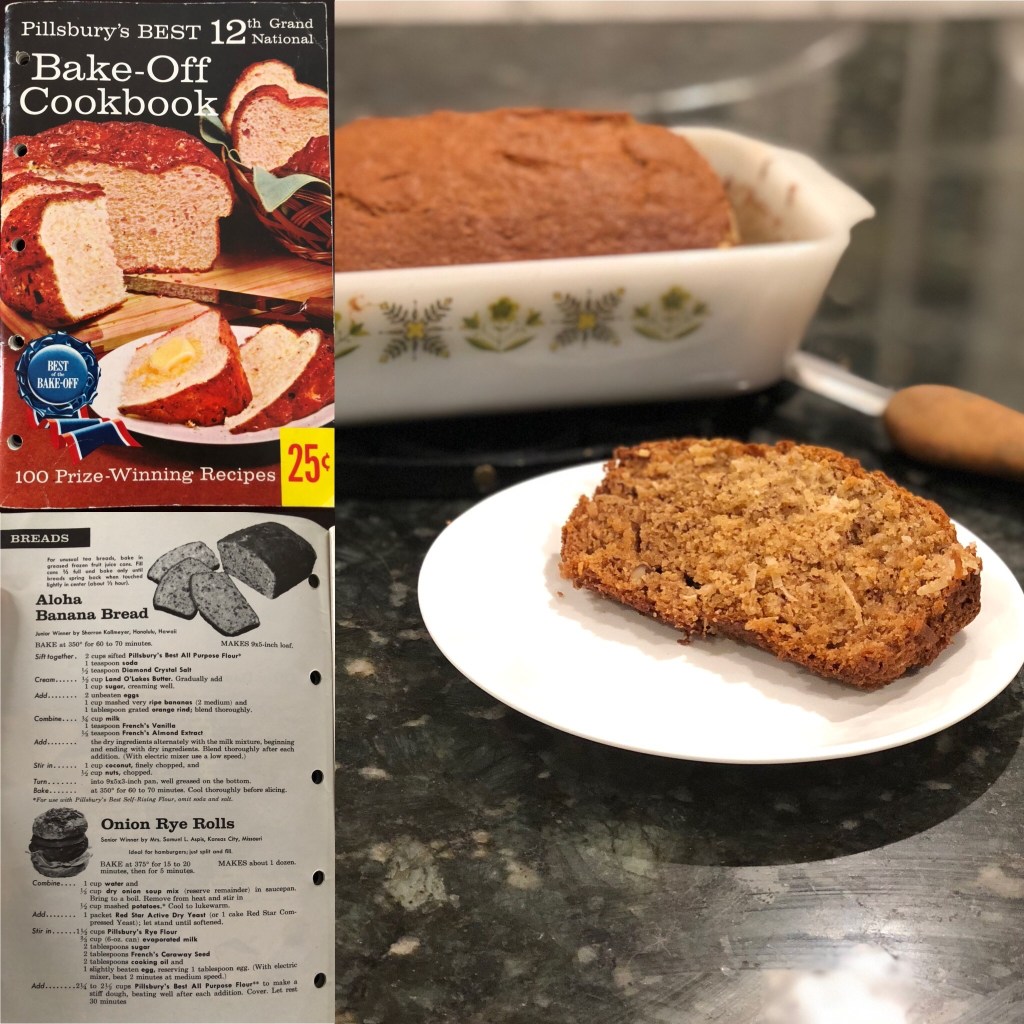
A Recipe from Pillsbury’s BEST 12th Grand National Bake-Off Cookbook (1961)

About the Recipe

Okay, I know what you’re thinking – really, Andi? Another banana bread recipe? Hear me out though – this one is different.

I’ve written before about the wonder that surrounded the act of Hawaii finally becoming a US state. In 1961, fresh into statehood, the continental US was going crazy over everything “Hawaiian” flavored. I would say that this contestant benefited from that mania, but really this is just an excellent recipe.

The depth of flavor added by incorporating the almond, orange, and coconut to the banana bread is out of this world. It’s just enough flavor to let you know that this loaf is something different altogether. I may never make “normal” banana bread again.

For more recipes in the Pillsbury Challenge, click here!

About the book

As always with Pillsbury, there were so many great recipes in this book to choose from. This one incorporates the small black and white photos that you see on the page above near a bunch of the recipes. It’s a nice change up from the participant photos from years prior.
About the glassware

We’ve seen this pan before, so I’ll write a little bit about the company that made it – Anchor Hocking. Named after the Hocking River in Ohio and founded in 1905 as the Hocking Glass Company, Anchor Hocking is still a major producer of glassware today. The pan above is a Fire-King branded pan, produced exclusively by Anchor Hocking (much like the Corning Glass Company produces Pyrex).

Anchor Hocking is perhaps best known for its depression glass. Just before the depression as the Hocking Glass Company, they developed a machine that was able to press glass at a much higher rate than anything hand blown. When the stock market crashed, they further developed a mold that allowed them to press quickly and efficiently, selling the glasses for two for a nickel – a bargain!

For more information on Anchor Hocking, check out the museum, lovingly put together by another collector trying to preserve the history.

The Recipe!

Ingredients:

2 cups sifted flour
1 t soda
1/2 t salt
1/2 cup butter
1 cup sugar
2 unbeaten eggs
1 cup mashed very ripe bananas (2 medium)
1 T grated orange rind
1/4 cup milk
1 t vanilla
1/2 t almond extract
1 cup coconut
1/2 cup nuts, chopped

Directions:

Sift together flour, baking soda, and salt. Cream butter. Gradually add sugar, creaming well. Add eggs, bananas, and orange rind; blend thoroughly.

Combine milk, vanilla, and almond extract. Add the dry ingredients alternately with the milk mixture, beginning and ending with dry ingredients. Blend thoroughly after each edition. (With electric mixer use a low speed.) Stir in coconut and nuts.

Turn into 9x5x3-inch pan, well greased on the bottom. Bake at 350* for 60-70 minutes. Cool thoroughly before slicing.

.

Raisin White Bread

Raisin White Bread

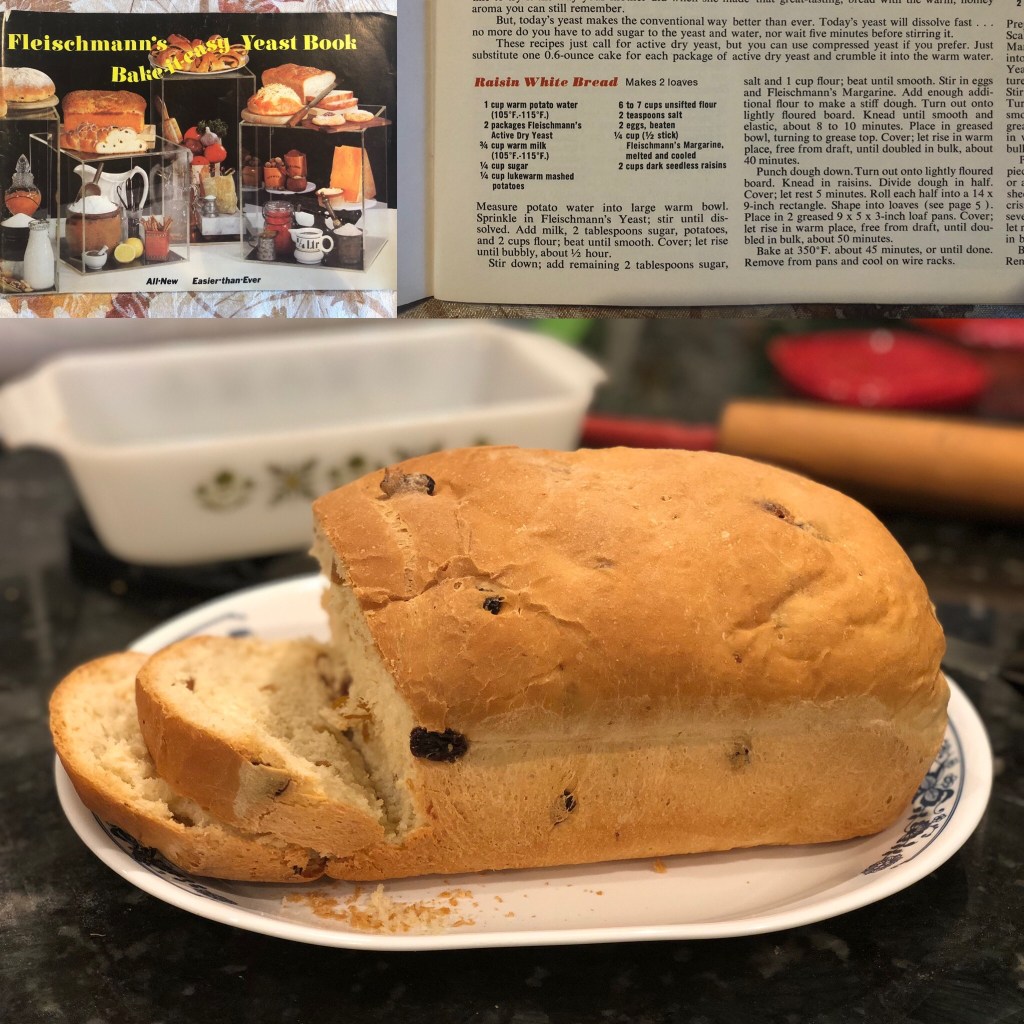
A Recipe from Fleischmann’s Bake-it-easy Yeast Book (1972)

About the Recipe

After a request for raisin bread from my husband was compounded with a weekly challenge in my favorite vintage cookbook group asking for a dish out of a vintage advertising book, I knew exactly where to turn!

Like many folks out there, yeast breads were scary for me. Little by little I’ve been trying my hand at more loaves. While this one is a little bit quirky with the mashed potatoes and starchy water used as a base, it’s absolutely stunningly delicious. The crust is crunchy and the inside is fluffy.

I used golden raisins, which are my favorite to bake with. This recipe would be very easy to substitute any kind of dried fruit into with success. Also, if you’re like me and don’t keep margarine around, just use a little vegetable oil instead of the melted margarine and it’ll work just fine.

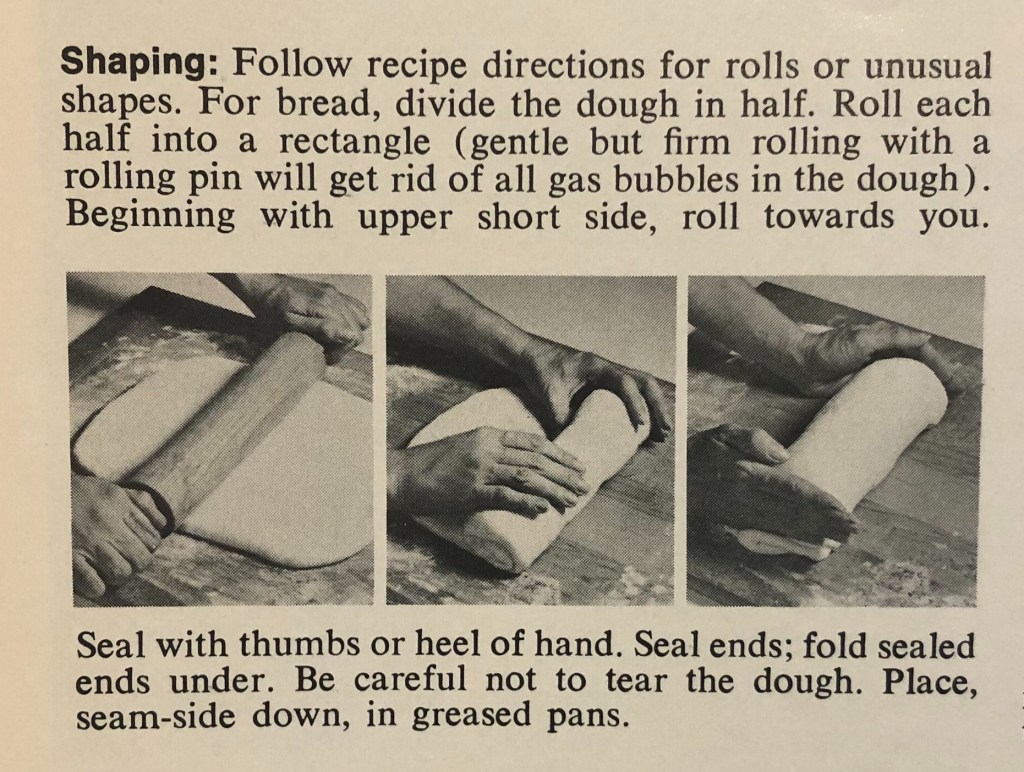
Oh! And since you don’t have the book, here’s are the instructions that are provided on shaping the loaf:

About the Book

This was another book from the Bonnie Slotnick grab bag, and she was so on point sending this my way. It has all of my favorite things – advertising, photographs, tried and true recipes designed to get you buying more! The recipes seem pretty simple and straightforward, and all of your favorite types of yeast breads are included. I can’t wait to bake from it again!

About the Glassware

I pulled out my Fire King Meadow Green loaf pan for this one. Something about milk glass just makes the best bread.

I plated on my Old Town Blue Corelle platter. This pattern was released in 1972, so perhaps mine’s not the first Fleischmann’s Bake-it-easy loaf to find its way on to this platter…

The Recipe!

Ingredients:

1 cup warm potato water (105*F – 115*F)
2 pkgs Fleischmann’s Active Dry Yeast
3/4 cup warm milk (105*F – 115*F)
1/4 cup sugar
1/4 cup lukewarm mashed potatoes
6-7 cups unsifted flour
2 tsp salt
2 eggs, beaten
1/4 cup margarine, melted & cooled
2 cups dark seedless raisins

Directions:

Measure potato water into large warm bowl. Sprinkle in Fleischmann’s Yeast; stir until disolved. Add milk, 2 T sugar, potatoes, and 2 cups flour; beat until smooth. Cover; let rise until bubbly, about 1/2 hour.

Stir down; add remaining 2 T sugar, salt and 1 cup flour; beat until smooth. Stir in eggs and margarine. Add enough additional flour to make a stiff dough. Turn out onto lightly floured board. Knead until smooth and elastic, about 8-10 minutes. Place in greased bowl, turning to grease top. Cover; let rise in warm place, free from draft, until doubled in bulk, about 40 minutes.

Punch dough down. Turn out onto lightly floured board. Knead in raisins. Divide dough in half. Cover; let rest 5 minutes. Roll each half into a 14×9-inch rectangle. Shape into loaves. Place in 2 greased 9x5x3-inch loaf pans. Cover; let rise in warm place, free from draft, until doubled in bulk, about 50 minutes.

Bake at 350* about 45 minutes, or until done. Remove from pans and cool on wire racks.

Swiss Cheese Braid

Swiss Cheese Braid

A Recipe from Bake-Off Cook Book from Pillsbury 100 prize winning recipes from the 22nd Bake Off (1971)

About the Recipe

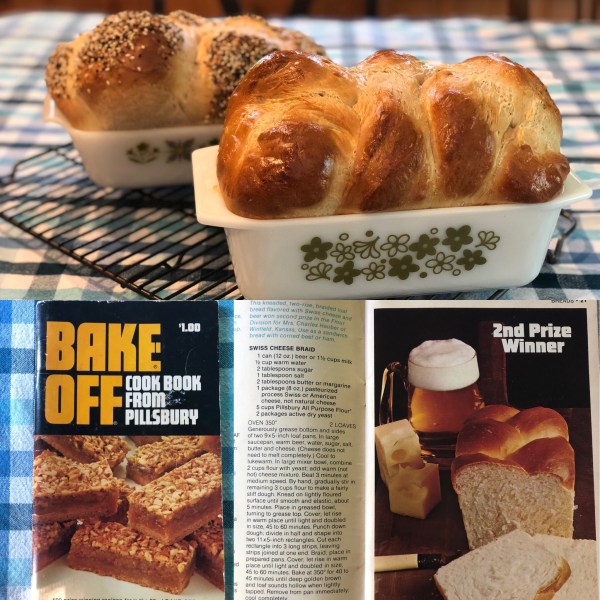
Wow oh wow were these loaves a hit! The beer combined with an abundance of yeast made what sounds like a heavy recipe, in actuality light, fluffy loaves of bread.

A few quick notes on some changes that I made that seemed to work well:

  • I used my KitchenAid mixer to do 90% of the mixing. I used the regular beater for the initial mix of the yeast into the first two cups of flour, than switched to the dough hook on the “Stir” setting while I added the additional flour. Once the dough was fairly set, I did a minute or so by hand to check the elasticity and texture of the dough.
  • I have a new obsession with Everything Bagel seasoning, and I just can’t resist the urge to throw it on a loaf of bread, especially when there are 2 loaves to play with. That said – go with a sprinkle, not a heaping like I did and the loaf won’t pull apart quite so much during the bake.
  • I used Guinness beer, which comes in 11.4 oz. bottles and made up the rest of the liquid volume with water, which worked fine.
  • The only processed cheese I could find at the store was American, sliced, from the deli… which also worked fine, but I can’t help but wonder how a processed Swiss or Velveeta would have worked in this recipe.

For more recipes in the Pillsbury Challenge, click here!

About the book

I hate to say it, but there’s nothing spectacularly interesting about this book. It’s a good book with several recipes that look to be easy to create, but nothing out of the ordinary. It’s almost like the editors were in the process of puzzling about what comes next. And the next book is notable indeed…

About the glassware

I can’t tell you how I ended up with two loaf pans with green patterns on it, but there you are! The Spring Blossom was a gift from my father, and the Meadow Green came from a flea market. They’re wonderful pans, and always come perfectly clean.

The Recipe!

Ingredients:

1 can (12 oz.) beer or 1 1/2 cups milk
1/2 cup warm water
2 T sugar
1 T salt
2 T butter or margarine
1 package (8 oz.) pasteurized process Swiss or American cheese, not natural cheese
5 cups flour
2 packages active dry yeast

Directions:

Generously grease bottom and sides of two 9×5-inch loaf pans.

In large saucepan, warm beer, water, sugar, salt, butter and cheese. (Cheese does not need to melt completely.) Cool to lukewarm (~220*F).

In large mixer bowl, combine 2 cups flour with yeast; add warm (not hot) cheese mixture. Beat 3 minutes at medium speed. By hand, gradually stir in remaining 3 cups flour to make a fairly stiff dough.

Knead on lightly floured surface until smooth and elastic, about 5 minutes. Place in greased bowl, turning to grease top. Cover; let rise in warm place until light and doubled in size, 45-60 minutes.

Punch down dough; divide in half and shape into two 11×5-inch rectangles. Cut each rectangle into 3 long strips, leaving strips joined at one end. Braid; place in prepared pans. Cover; let rise in warm place until light and doubled in size, 45-60 minutes.

Bake at 350* for 40 to 45 minutes until deep golden brown and loaf sounds hollow when lightly tapped. Remove from pan immediately; cool completely.

.